

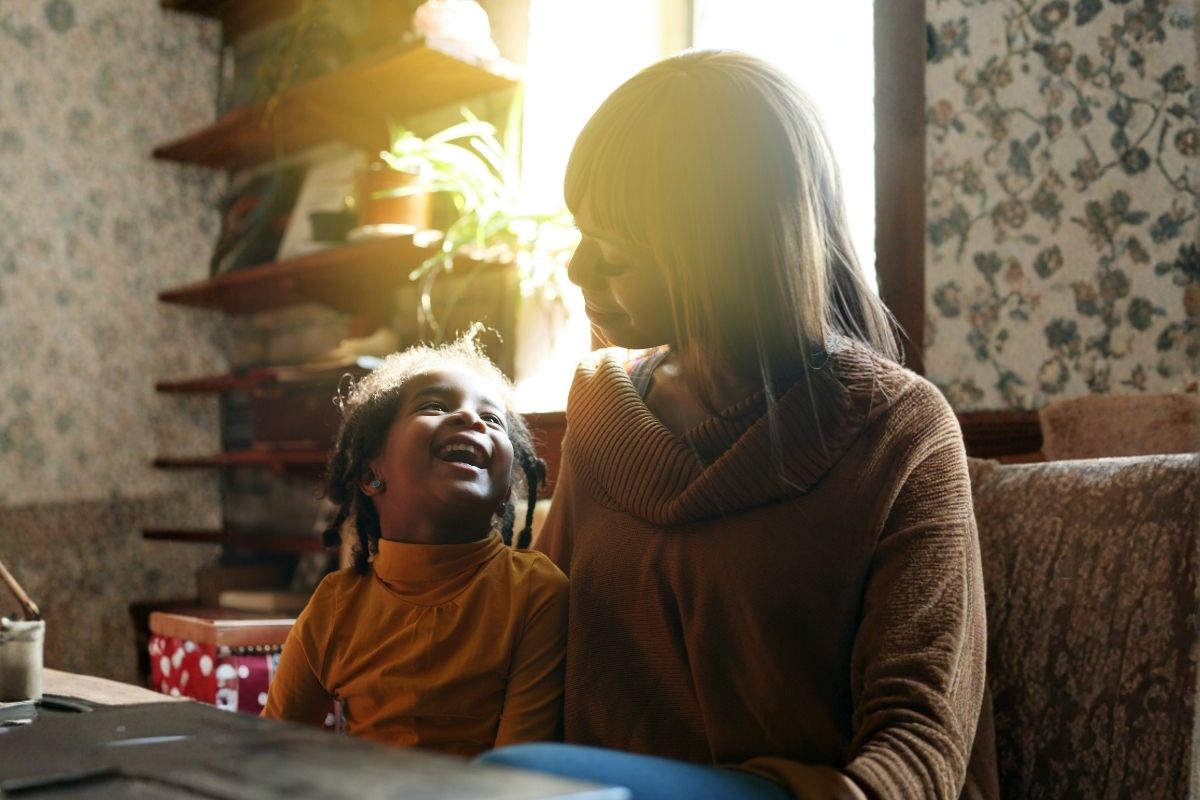



You are in the room with your child, and you are also in about nine other rooms. You are thinking about the permission slip, and the reply you still owe someone, and whether the chicken thawed. And there is that thing your kid said this morning that you keep meaning to come back to, and have not had a clear minute for. You are right there on the floor building the tower, and you are not really there at all. This is the ache underneath present parenting: your body is in the room, but your attention is still answering the rest of life.
You already know all of this, and here is the part almost no one says out loud. When your child yells your name, not once but twice, you miss it the first time. And when you finally do hear it, the first thing you feel is not warmth. The first thing you feel is a small flash of frustration. Not at your child but at the interruption, at being needed in a minute already full to the top.
That feeling is not a flaw in you, it is only a body with no room left in it.
Why we don’t turn around
Most of us do not turn around. We say “what?” without looking up, or we call it back across the room, or we answer from another floor. Or we keep one hand on the phone and half an ear on the child. We tell ourselves that counts as listening. The hardest thing, and also the smallest, is to stop, turn, and let them have us for one whole second.
And yes, that costs you something. You lose your place, the thought you were holding slips, and you are not sure it will come back. That is real, and it is not nothing. But that one second is not a break from your day. It is the part of the day that was always the point.
None of this is a focus problem, and it is not a sign that you love your child less. No less than the mother who looks calmer than you on the internet. It is simply what a full life does to attention. The mind goes where the pressure is, and right now the pressure is everywhere at once.
What present parenting actually means
Present parenting is bringing your attention to right now, to the child in front of you. Not to next week’s logistics. That is really the whole of it. It is not a technique, and it is not a mood you have to pretend to be in. It is just your attention, placed on purpose on the child in front of you. In the room you are already standing in. And once you can see it like that, present parenting is really just intentional parenting, lived out in a single moment.
What present parenting really asks of you
This might sound small, but it is the opposite of small. Presence is how you are able to enter the relationship at all. The truth is that a child does not feel loved by the plans we make for them. And they do not feel it just because we happen to be nearby. They feel it in the minutes we are actually with them. When our eyes are with them, and our body is with them. When the next thing is set down for a moment. This is one way a child begins to feel seen. Your attention has stopped passing through them on its way to somewhere else.
And here is what I want to take off your plate first. Presence is not another item on the list. So many of us hear “be more present” and quietly add it to the pile. It goes right under “drink more water” and “stop comparing yourself,” and then we feel behind on that too. But it is not a task, it is a place you return to, and you have been there before. You will be there again tonight, probably without even trying, in some ordinary minute you will not think to mark.
It lives in the body, not the plan
I have a doctorate in psychology. And the part that still surprises me is how little of this happens in the mind.
You cannot think your way into being present. You can promise yourself, the whole drive home, that tonight you will be all there. And still you walk through the door three steps behind, narrating the day to yourself. Attention does not follow instructions, it follows the state of the body.
A wound-tight body cannot land in the moment, because it is still bracing, still scanning, still finishing the last thing. A body that has dropped its shoulders, even once, can. So the work was never a better plan for presence. It is a slightly settled body, walking into the room.
This is also why scripts do not hold. Think about an actor for a second. She can know every line cold. Then she steps onto the set, and a real person is standing in front of her. The moment turns real, and the words go straight out of her head. If she reaches for them anyway, you can see it happen. She goes stiff, and the lines come out true to the page and flat in the room.
Why rehearsed words disappear
The same thing happens to you at bath time. A line you memorized with the thinking part of your brain, with no feeling attached, is fragile. The moment a real feeling shows up, your child’s or your own, that thinking part goes quiet. The older, faster part of the brain takes over, and the rehearsed words are the first thing to go. It is the opposite of how you still know every word of a song from twenty years ago. That one stayed because it was wired to feeling. A script never stays, because it was only ever wired to effort.
And if you are picturing actors who are wonderful, who never seem to lose the thread, you are right that they exist. But typically they are not reciting from rote memory either. The good ones do not prepare a part in isolation, they prepare it in relationship. So that when the moment turns real, they are not reaching for words at all. They are simply answering what is in front of them. And that is the whole difference, and it is your difference too.
So the answer was never a better script. It is to walk in already carrying the state of presence. So there is nothing to perform and nothing to remember. Which leaves only one real question. How do you carry presence into a room when you have had no time to find it?

How to be more present with your kids without adding anything
People always want the technique here. So I will give you one small thing, and then I will tell you the truth about it.
The small thing is not your breath. You already know about your breath, and you have been told to breathe a thousand times. Usually by someone calm, usually in the exact moment when breathing was the last thing your body could reach for. In a feeling that is hard to hold, the breath is often the hardest door in the house.
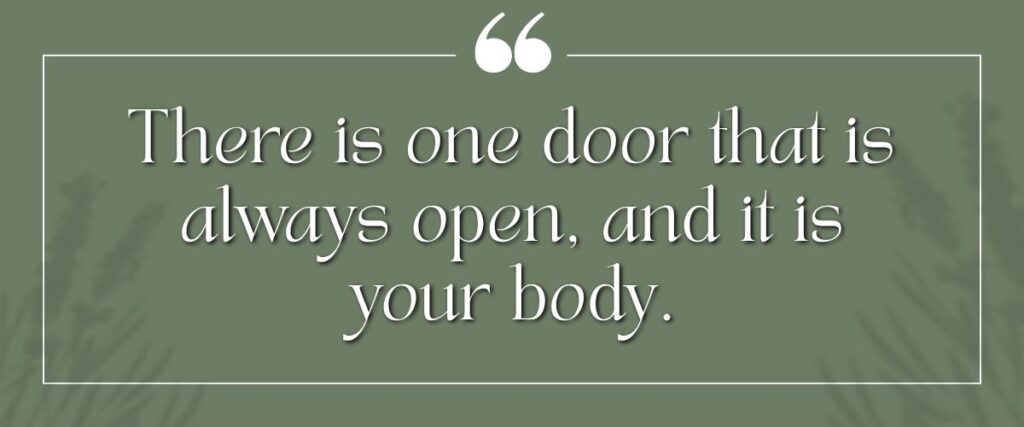
But there is one door that is always open, and it is your body. You are always in it, and you cannot lose it the way you lose a clear mind.
The one small thing to try
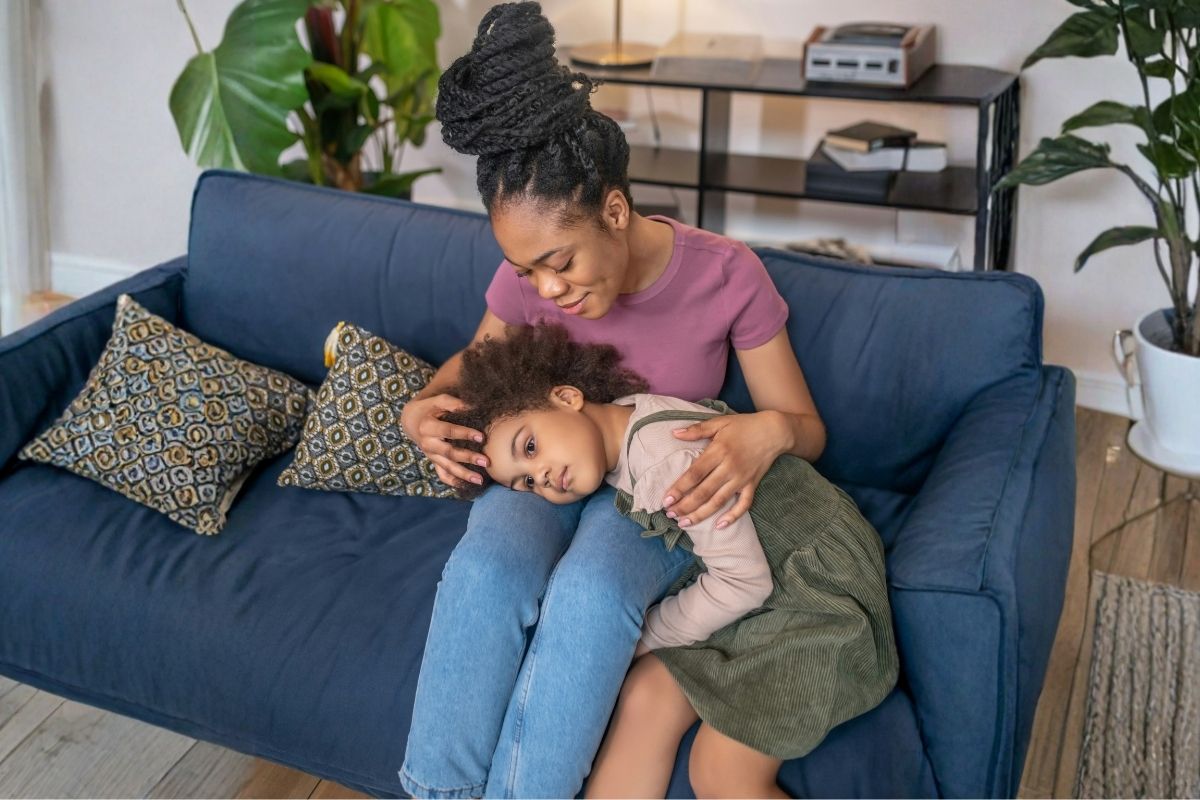
So before you walk into the room, press one hand flat against the center of your chest. Not with a light touch but with real pressure, enough that your body feels it. Press the way you would to find your own heartbeat. Hold it there for a few seconds, and then let it go.
The pressure is the point. A soft touch barely registers, and your body needs more weight behind it to believe you. It wants something it can feel, something you are doing and not just holding. The press is a small action that tells your body, in the only language it fully trusts. It says that you are here, that you are safe, that you are not alone. Your system reads it before your mind can argue, and your shoulders come down before you have decided anything.
Then, and only then, you look for one true thing about your child. Like the way they are holding the marker, or the exact sound of how they say a word wrong. Not to fix it, just to see it. And if something in you wants to, you smile, even just with your eyes. Not because you are supposed to, but because you actually saw them.
You will have heard some of this called mindful parenting, and the two do overlap. Both are about attention, here, now. But present parenting is not a meditation you bolt onto an already-full day. It is a return to something that was always yours.
What presence is actually for
Here is the real reason any of this matters, and it is the heart of everything I do. When you are actually here, you can feel the moment a feeling arrives. Like the small change in your child’s face, or the shift in the air just before the meltdown. You catch it early, while it is still a feeling that is hard to hold and not yet a storm. You cannot tend to something you were too far away to notice. Presence is simply what puts you close enough to meet the feeling at all.
That is what present parenting is for. Not a calmer house, though you may well get one. But being near enough to your child, and near enough to yourself, to meet what is actually there.
The part the culture got wrong
Here is the reframe I most want you to keep. Most of raising a child was always meant to be the relationship, the being-with. The ordinary hours that do not go on any calendar. The logistics, the gear, the schedule, the managing, all of that was meant to be the smaller part, the supporting cast.
Modern life flipped it. The managing grew until it swallowed the day, and the being-with got squeezed into the corners. So now presence feels like the thing you have to schedule, and the logistics feel like the real job. That is backward, and it is not backward because of anything you did. It happened to all of us, slowly, over a couple of generations, while everyone was just trying to keep up.
Being there for your child does not mean being present every minute, because no one is. It means that the minutes you are in, you are actually in. A smaller number of true minutes will always beat a long day of half-here. Children can tell the difference, and if you are honest, so can you.

You are not behind
I do not think you need more information. You have plenty, because you have read the books, followed the people, and saved the posts. What I think you are missing is permission. You have to put the next thing down and look at your child. That quiet, unglamorous act is not a soft skill or a nice-to-have. It is the center of the whole thing. It is where you actually build the foundation you keep worrying about.
You are not behind. You are a mother in a culture that handed you the managing and called it the relationship. And present parenting is simply how you take the relationship back, one ordinary minute at a time.
Frequently asked questions about present parenting
What is present parenting?
Present parenting means bringing your attention to the child in front of you, in the moment you are already in. It is not a technique or a mood you have to perform. It is attention placed on purpose inside the relationship.
How do I become a more present parent?
Start smaller than a plan. Before you walk into the room, press one hand firmly against the center of your chest for a few seconds. Let your body register that you are here. Then look for one true thing about your child, not to fix it, but to see it.
How can I be more present with my kids?
You do not need to be fully available all day. Begin with one ordinary minute where your eyes, body, and attention are with your child. Put the next thing down, turn toward them, and let that moment have you.
What does being there for your child mean?
Being there for your child does not mean being available every minute. It means offering enough physical and emotional presence that your child can feel met in the moments that matter. Sometimes that is a long conversation. Sometimes it is one second of turning toward them with your whole attention.
Is present parenting the same as mindful parenting?
Present parenting and mindful parenting overlap because both involve attention in the present moment. The difference is that present parenting is not a meditation practice added to your day. It is a return to the relationship already happening between you and your child.
How do I practice present parenting when I feel overwhelmed?
Do not start by trying to think your way into calm. Presence lives in the body first. Give your body one clear signal, like pressing a hand to the center of your chest, so it can settle enough to meet the child in front of you.





+ show Comments
- Hide Comments
add a comment